Manufacturing & real estate
The licensing model has a physical side of production lines, plush factories and warehouses, and almost none of it belongs to Sanrio. The company designs the character, approves the sample, and books the royalty. Someone else runs the line, and outside Japan, someone else owns the building.
Manufacturing
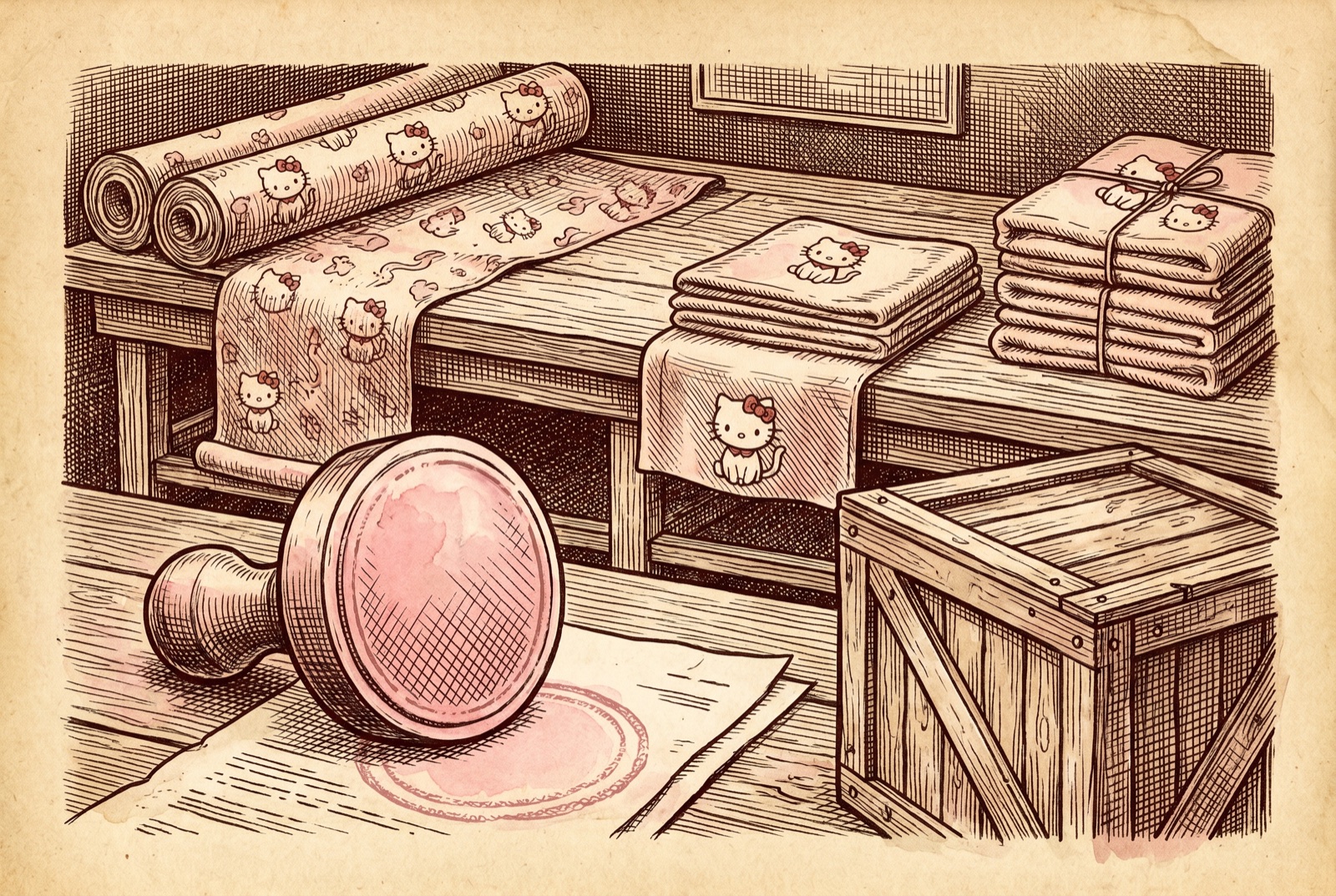
Sanrio barely runs a factory. It designs the characters and guards the brand. The lunchboxes, plush, stationery and apparel are mostly made by licensees and their contract manufacturers, with Sanrio approving the design and taking a royalty.
In the early decades Sanrio did make and sell its own "social communication" gifts, the small stationery and novelties sold through its Gift Gate stores. That direct-product business is now the minority of sales and shrinking as a share.
Today most goods are produced under license. A licensee commissions the manufacturing, usually from contract factories in China and elsewhere in Asia, and pays Sanrio a royalty on what sells. Sanrio’s job is the IP, the design approvals, and quality and brand control, not the production line.
That is why the margins read the way they do. A royalty carries almost no cost of goods, so as licensing grew from under 40 percent of sales to nearly half, the operating margin climbed toward 40 percent.
It is also why counterfeiting is the main manufacturing-side risk. When the genuine article is made by third parties to a printed spec, a fake made to a similar spec is cheap to pass off. Most of the case archive is, in the end, about that.
Real estate
For a company this size, Sanrio owns relatively little property, and that is the point of the model. The real estate it carries is mostly in Japan. Abroad, partners put up the buildings.
Owned, in Japan. The two Japanese parks, Sanrio Puroland in Tama and Harmonyland in Oita, are the largest properties Sanrio operates directly. Puroland is an indoor building on land tied to the company since 1990. The Tokyo headquarters and the domestic Sanrio and Gift Gate store network round out the directly held footprint.
Licensed, abroad. Overseas, Sanrio licenses rather than builds. The China park in Anji sits on roughly 95,000 square meters reportedly built for about $215 million, financed and run by the local operator Zhejiang Yinrun, not by Sanrio. The former Sanrio Hello Kitty Town in Malaysia was likewise a licensed local operation, which is why its 2019 closure was the operator’s loss to take. The same structure shows up in retail and dining. Most Hello Kitty cafes and stores abroad are leased and fitted out by licensees, with Sanrio supplying the brand and the standards.
Advisory firms
Like any listed company, Sanrio uses outside banks and advisers for financing, buybacks and corporate deals. Named advisers on specific Sanrio property or M&A transactions are generally not disclosed in public filings, so this archive does not list firm names it cannot verify.